
How to Turn a Work Trip Into a Weekend You’ll Actually Remember
The best work-and-leisure trips aren't made by bolting two days onto a business itinerary. They're made by staying in the right neighborhood, choosing a place that flexes between work and downtime, and leaving enough room for the city to surprise you.


The best work-and-leisure trips aren’t made by bolting two days onto a business itinerary. They’re made by staying in the right neighborhood, choosing a place that flexes between work and downtime, and leaving enough room for the city to surprise you.
At a Glance
- Choose the neighborhood before the hotelit shapes your evenings more than any amenity.
- Don’t plan a second vacationone or two anchors, then leave room to wander.
- Stay somewhere that flexesspace to work andrelax, plus a kitchen for slow mornings.
- Extend by a day or twosmall extensions tend to pay off out of all proportion.
- How Sonder works: Sonder curates the stays; bookings are fulfilled by our partners.
Why Bleisure Keeps Growing
The line between work and leisure has quietly dissolved. Remote work, flexible schedules, and hybrid offices have changed how people travel instead of flying in, meeting, and leaving, they extend. A conference becomes a long weekend . A client meeting becomes a reason to see a city you’ve never explored. A few days of work become a reason to stay through Sunday instead of rushing home Friday night.
The appeal isn’t just more free time. It’s making better use of time you’re already spending away from home the flight is booked, the effort is spent, and a little intention turns it into something you’ll actually remember.
The Mistake Almost Everyone Makes
Most business travelers book by one thing: proximity to meetings . It’s logical and it quietly ends the trip the moment the workday does. You leave the office, head back to a business district, order takeout, and repeat until your flight. You’ve technically visiteda city without experiencing it.
Your neighborhood decides far more than your commute. It decides where you get coffee, where you eat dinner, whether you walk or call a car, how easily you explore after work, and crucially whether extending the trip even feels worth it. The simplest way to a memorable work-and-weekend trip usually isn’t adding attractions. It’s choosing a better neighborhood .
Choose the Neighborhood Before the Hotel
Most people book a property first and think about the area second. Flipping that produces better trips. Before comparing amenities, ask: What do I want my evenings to look like? Would I rather walk to dinner or commute across town? Do I want parks, waterfront, cafés, or nightlife nearby? Can I picture spending an extra day here?
The neighborhoods that work best for a work-and-weekend trip are the ones where local life happens so the shift from work mode to wandering takes no plan at all. A few that consistently deliver:
| Neighborhood | City | Why it works for bleisure |
|---|---|---|
| Flatiron | New York | Meetings in Midtown, dinner and Madison Square Park on foot |
| Fulton Market | Chicago | Step straight from meetings into a top dining district |
| Brickell | Miami | Walkable workdays plus waterfront and cafés to linger in |
| South Congress | Austin | Coffee, live music, and walkable streets that fill free time for you |
In each, the memorable part isn’t the landmark it’s how easily you end up somewhere worth staying longer.

Leave Room for the Unplanned
The most common leisure-day mistake is treating it like a vacation and scheduling every hour. It’s exhausting, not enjoyable. The best weekends have a little structure and a lot of space maybe one museum, maybe one dinner reservation, and beyond that, let the neighborhood lead.
Spend an extra hour in a cafés. Walk a street you hadn’t planned to. Stay longer in a park because the weather’s perfect. Those unplanned moments tend to outlast the activities people book months ahead and they’re the difference between racing through a checklist and letting a city start to feel familiar.
One reframe helps: think in neighborhoods, not attractions . Instead of six stops across a city, pick one area and go deep a slow Saturday in Tribeca with coffee, a browse, and a long lunch, or a morning in Coconut Grove before an evening by the bay. The goal isn’t to see everything. It’s to experience something.
Pick a Stay That Flexes for Both Halves of the Trip
Turning a work trip into a weekend isn’t only about location it’s about a place that supports very different days. The traveler in back-to-back meetings on Thursday and the one having a slow Saturday morning have different needs, and most business accommodations are built only for the first.
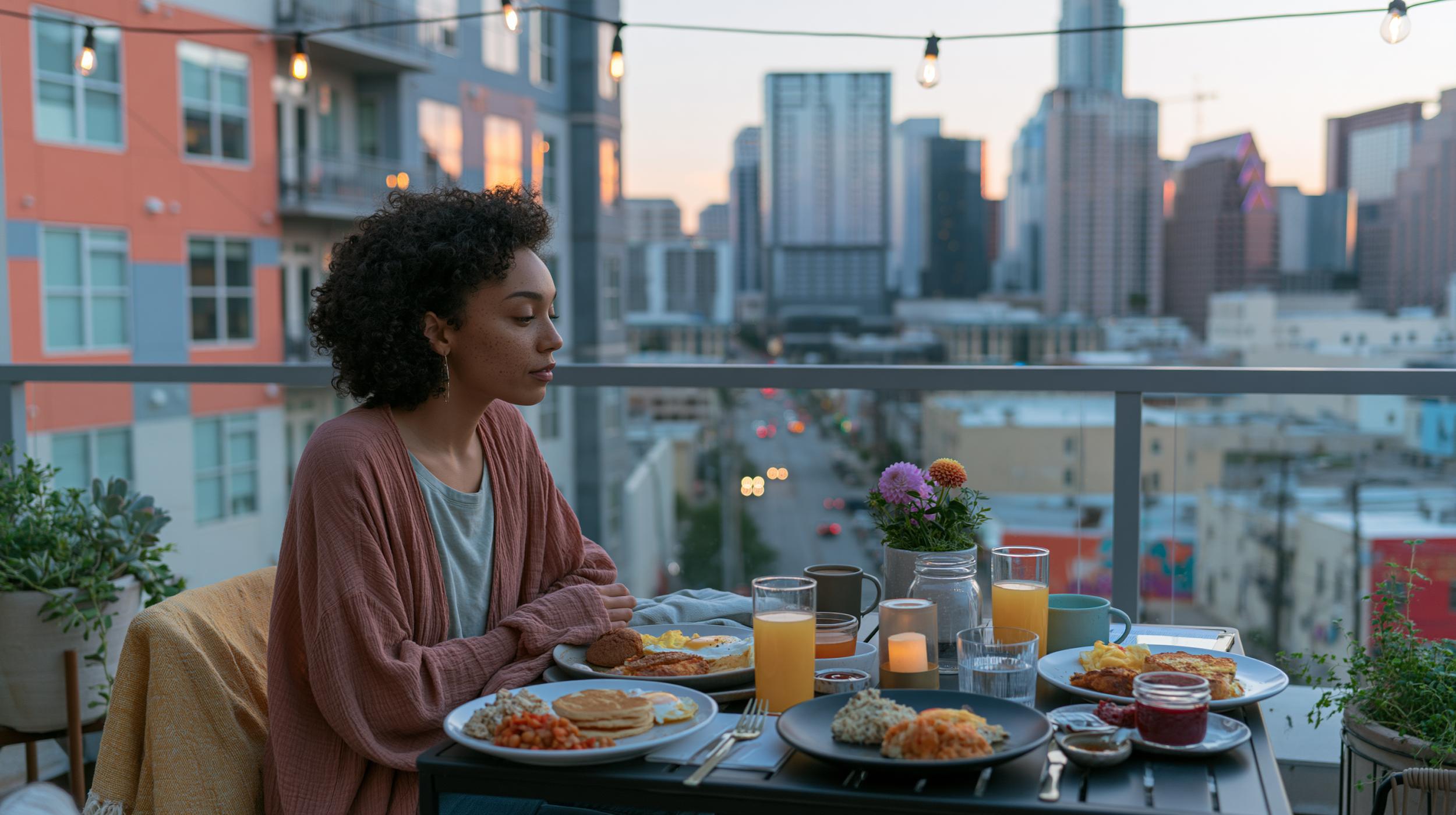
Three things make the difference . Space, so you can separate work from downtime after days of meetings, somewhere to read or eat that isn’t the edge of the bed changes the whole stay. A kitchen, because not every good travel memory happens in a restaurant; sometimes it’s coffee made slowly before you head out. And neighborhood access, which tends to beat luxury being able to walk to cafés, restaurants, and parks improves a trip more than any single in-room feature. Get those right and you stop feeling trapped in a business trip and start feeling like you’ve settled into a place.
That’s also why longer stays stick in memory. Off the 48-hour clock, you notice details, find favorite streets, learn how a neighborhood shifts from morning to evening and you get the quiet luxury of returning somewhere twice. The same coffee shop. The same route on a different day. It’s the difference between visiting a city and briefly living in it.
The Real Test: Should You Extend?
Not every trip should become a weekend but more of them could. Three questions usually settle it:
- Would you visit this city if work weren’t involved? If yes, you’re already there and the flight’s booked; adding a day or two is the most efficient way to see somewhere you actually want to.
- Does the neighborhood support leisure? Walkability, dining, outdoor space, and local character make the shift into downtime effortless. Areas like Flatiron, Fulton Market, Brickell, and South Congress are built for it.
- Will one more day genuinely improve the trip? An unhurried morning, an evening with no obligations, a city at your own pace sometimes a single extra day is worth more than a whole week elsewhere.
And avoid the small traps: don’t book the first flight out the second meetings end (one extra night often transforms the trip), and don’t treat leisure hours as productive time business travel already asks enough of your attention.
Where Sonder Fits
A work trip that flexes into a weekend is exactly what Sonder is built for design-led spaces with room to work, a kitchen for slow mornings, and a real sense of place, in walkable neighborhoods rather than empty business districts. We curate the stays; our partners handle the booking. Start from our work-friendly, longer-stay collection, or read where to stay in New York and the best neighborhoods in Chicago to pick your base.
Sonder’s take: The single highest-leverage decision is the neighborhood get that right and the weekend almost plans itself. We’d rather you book a stay you can picture spending a free Saturday in than one that’s five minutes closer to the office. And when in doubt, stay the extra night: the trips people remember are almost never the ones they cut short to catch an earlier flight.
Frequently Asked Questions
What is bleisure travel?
Bleisure travel combines business and leisure in one trip extending a work trip to explore the destination, spend personal time in the city, or enjoy experiences beyond your professional obligations, rather than flying home the moment meetings end.
How long should I extend a work trip?
One to three extra days is the sweet spot for most travelers enough to experience a destination at a slower pace without significantly disrupting your personal or professional schedule. Even a single added night often changes the whole trip.
What makes a neighborhood good for bleisure travel?
Walkability, good restaurants and cafés, parks, easy transit, and genuine local character. Those are what let you move from a workday into a relaxed evening without a plan the core of a good work-and-weekend trip.
Which cities are best for bleisure travel?
New York, Chicago, Miami, Austin, and San Francisco all work especially well, thanks to strong neighborhoods, dining scenes, and stays that support flexible, longer trips.
What type of accommodation is best for bleisure travel?
A stay with extra living space, a kitchen, a real workspace, and a walkable location. Those features make the transition from work to downtime easy and turn a business trip into something closer to briefly living somewhere.
Make the Most of the Trip You’re Already Taking
The best work-and-weekend trips don’t need elaborate planning. They start with the right neighborhood, a stay that flexes between work and rest, and permission to experience a city beyond your meeting schedule. A great work trip gets the job done; a great bleisure trip gives you a reason to remember where you went.
Looking for more? Explore our guides to where to stay in Miami for long stays, where to stay in Texas, and what a luxury aparthotel actually is each built to help you travel more intentionally and stay more comfortably.


