

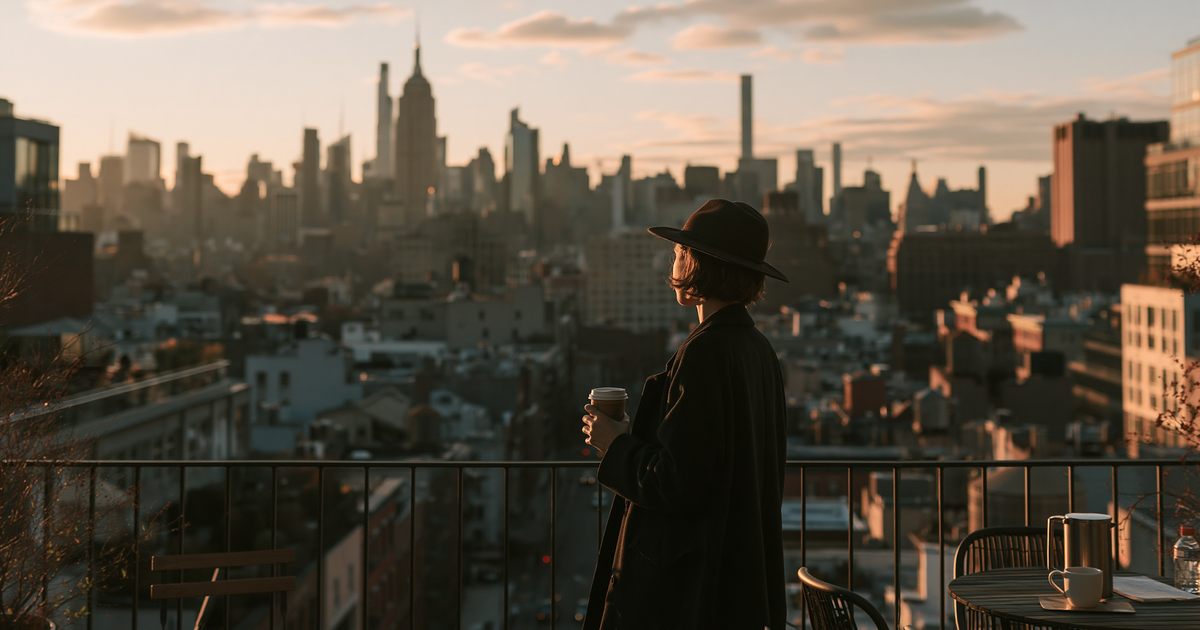
Where you stay in New York decides more than your address; it shapes your morning coffee, your commute, and the last dinner of the trip. For a stay that lets a productive week slide into a weekend you'll want to extend, base yourself in Flatiron, NoMad, the West Village, Chelsea, Tribeca, the Financial District, or Williamsburg.
At a Glance
- For work + weekend balance: Flatiron central, walkable, alive after hours.
- For dining and design: NoMad great restaurants, handsome streets, steps from Koreatown.
- For charm and walkable dinners: West Village winding streets, cafés and the most photogenic blocks in Manhattan.
- For galleries and the High Line: Chelsea art, design, and a walkable riverside.
- For a slower, residential stay: Tribeca quiet, upscale, waterfront mornings.
- For connectivity on a packed schedule: Financial District transit-rich, efficient, increasingly livable.
- For local energy and skyline views: Williamsburg, creative Brooklyn, minutes from Manhattan.
- How Sonder works: Sonder curates the stays; bookings are fulfilled by our partners.
Start With the Trip You Want
New York gets treated as one destination, but choosing where to stay is really choosing how you want to experience it. Base yourself near Madison Square Park, and you'll have a completely different trip than you would in Tribeca or Williamsburg, with different restaurants, a different pace, and a different way of moving through the city.
So skip the question of which neighborhood is "best." The better question is which one matches the trip you're actually planning, and that usually comes down to four things: How walkable it is, how good the dining is, how well it's connected by transit, and whether it has a sense of place you'll want to come home to.
Our short answer: If you want one neighborhood that does the most, stay in Flatiron. If you have a clear priority, dining, quiet, connectivity, or local Brooklyn energy, read on.
Flatiron, for the Week That Becomes a Weekend
If you want balance above all, this is our pick. Sitting between Midtown and Downtown, Flatiron gives you serious transit access while still feeling like a neighborhood rather than an office park, and unlike the pure business districts, it stays awake in the evening.
Madison Square Park is the neighborhood's living room: Lunch crowds, dog walkers at dawn, a patch of openness in one of Manhattan's busiest stretches. You're at the crossroads of Fifth Avenue and Broadway, so meetings in Midtown, shopping uptown, and Lower Manhattan are all reachable on foot or one quick subway hop. And Eataly, beside the Flatiron Building, quietly becomes part of your routine breakfast before work, an espresso between meetings, ingredients for a dinner in. By day two, you'll be back for the third time.
That mix of convenience wrapped in restaurants, parks, and cafés is why a Flatiron weekday rolls so easily into a weekend worth staying for. See our luxury aparthotels in New York for stays in and around the neighborhood.
A day here: Coffee and emails at a café off the park, meetings in Midtown via the N/R/W or a fifteen-minute walk, a working lunch around the Flatiron Building, then dinner along Park Avenue South before a slow loop back through the park.
NoMad: Dinner and Good Architecture
Choose NoMad if food and atmosphere lead your trip. Just north of Flatiron, it pairs century-old architecture with one of Manhattan's strongest hospitality scenes, polished but not stiff.
The buildings give the area a sense of permanence that newer districts can't fake, while the restaurants, bars, and creative spaces keep it current. Koreatown sits a short walk away, which means some of the city's best late-night dining, Korean barbecue, casual cafés and dessert spots are effectively your backyard. And from NoMad you can reach Midtown, Chelsea, Union Square, and the Financial District quickly, so you spend less of the trip commuting and more of it eating well.
Stay here, and New York feels both grand and walkable, handsome enough to slow you down, convenient enough to keep your week moving. It's one of the city's strongest all-rounders.
A day here: Breakfast at a corner spot, a focused work morning, then a long Koreatown dinner that turns into a second round of dessert a few doors down.
The West Village, for Walk-Home Dinners
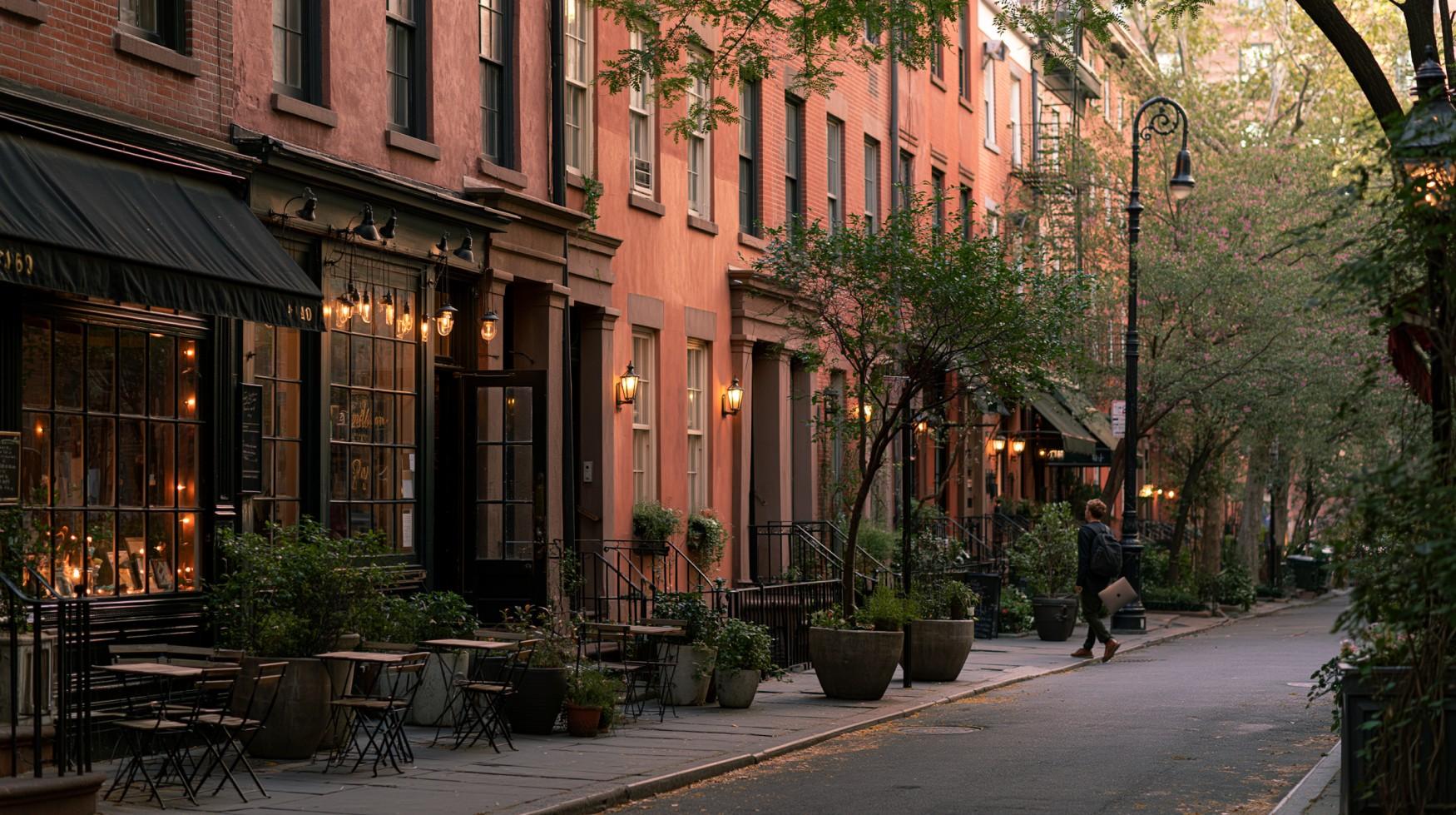
If you want the New York that looks like the movies and dinners, you can walk to the West Village. This is the design-conscious traveler's neighborhood : Tree-lined streets that break the grid, low brownstones, and a pace that feels more like a village than a borough of millions.
It rewards wandering more than planning. Bleecker and the surrounding blocks hold independent boutiques, wine bars, bakeries, and small restaurants where the table is yours for the evening. The waterfront and the southern end of the High Line are an easy stroll west, and the 1/2/3 and A/C/E lines keep the rest of the city close when you need it. For work, it's quieter than Midtown but well-connected, a calm base that still puts a great dinner two minutes from your door.
A day here: A slow morning over coffee on a side street, calls from the apartment or a quiet café, an afternoon walk along the Hudson, then a neighborhood dinner you didn't book because you didn't have to.
For a stay built around charm, walkability, and food, the West Village is the most Sonder-feeling corner of Manhattan.
Chelsea, Art and the High Line
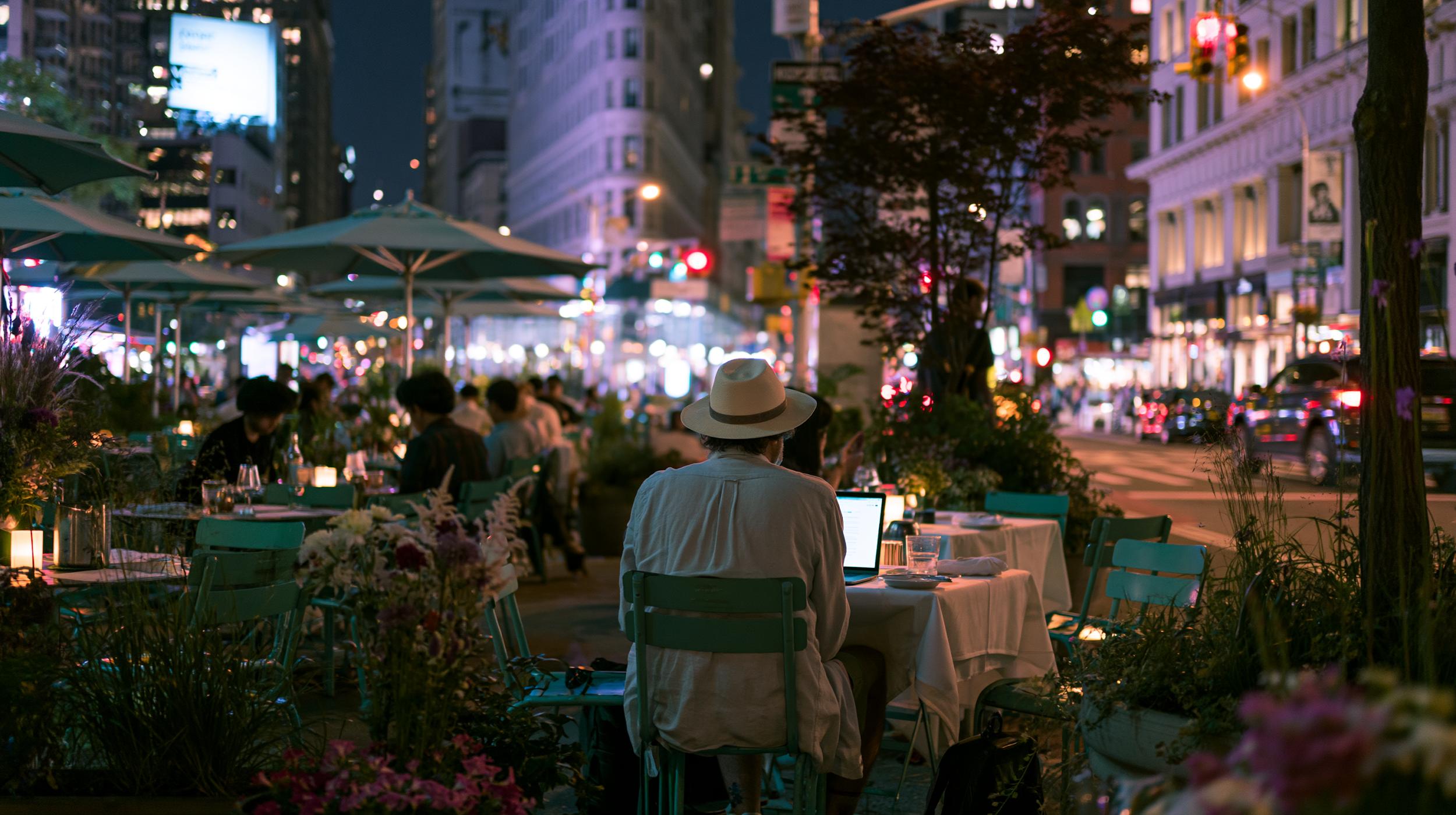
Choose Chelsea if you want design and culture on your doorstep. The gallery district, the High Line, and Chelsea Market sit within a few walkable blocks, which makes it one of the most rewarding neighborhoods in the city to stay in without a plan.
Mornings can start on the High Line, the elevated park threading above the streets toward Hudson Yards, and days fill easily with galleries, design shops, and the food stalls inside Chelsea Market. It's well-suited to work-leisure travel: Cafés to take calls from, a strong dining range from quick to special-occasion, and the A/C/E and 1 lines for getting uptown or down. The riverfront parks add room to breathe at the end of a working day.
A day here: A High Line walk before work, a productive stretch with a Chelsea Market lunch, an afternoon drifting through galleries, then dinner and a riverside sunset.
Stay here, and the best parts of the trip are the ones you didn't schedule: A gallery you wander into, a sunset over the river after a working day. For art, design, and walkable culture, Chelsea is hard to beat.
Tribeca, a Slower New York
If you're staying several days or longer and want your base to feel like a home rather than a stopover, choose Tribeca. Wide streets, converted warehouses, and a strong neighborhood identity make it noticeably calmer than much of Manhattan.
Start mornings at Hudson River Park, with miles of waterfront paths, green space, and a coffee-and-a-walk openness that's hard to find elsewhere downtown. Around Washington Market Park, you'll see actual residential life: Local families, neighborhood cafés streets that stay local despite the area's popularity. The dining mirrors the neighborhood, refined, understated, built for a lingering dinner rather than a rushed one, and you can walk to it without wading through an entertainment district.
For longer stays where calm is the point, Tribeca is the one.
A day here: A Hudson River Park walk with coffee before the city wakes, a heads-down work morning, a quiet lunch nearby, and an unhurried dinner at a neighborhood restaurant you return to twice.
The Financial District, When the Schedule Is Tight
FiDi is misread as offices-only. It's actually one of Lower Manhattan's most convenient bases, and the smart pick when your schedule is tight. One World Trade Center anchors the area with offices, transit, and public space; Brookfield Place adds waterfront dining and indoor shopping that earns its keep in winter; and the nearby Seaport District brings cobblestones, East River views, and the Brooklyn Bridge into the mix.
The real advantage is movement. Multiple subway lines, PATH trains, and ferries make this one of the easiest places in the city to get anywhere, which, on a packed itinerary, can be the difference between two meetings and four. Waterfront parks and growing residential amenities make the Financial District feel more balanced than first-timers expect.
A day here: A fast coffee before back-to-back meetings, lunch at Brookfield Place, a ferry or a few quick stops between appointments, and an evening walk along the Seaport with the bridge lit up.
Williamsburg, for the Skyline and a Local Trip
Willing to cross the river? Williamsburg rewards it. Once industrial, now one of Brooklyn's most desirable neighborhoods, it draws visitors from everywhere while keeping a local identity most tourist areas lose.
Domino Park, built on the old Domino Sugar Factory site, captures the whole transformation of Manhattan skyline views, walking paths, sunset over the East River, the kind of spot that becomes a daily ritual within a day of arriving. Bedford Avenue is the main artery: Independent boutiques, coffee shops, bakeries, and restaurants you discover by wandering rather than by searching. The growing waterfront adds parks, ferry access, and breathing room that's genuinely rare in New York.
For a longer stay where you want New York without standing in its tourist crush, Williamsburg delivers the local trip most people are actually hoping for, minutes from Manhattan by train or ferry.
A day here: A morning at Domino Park with the skyline across the water, work from a Bedford Avenue café, the L train or the ferry into Manhattan if you need it, then dinner and drinks back in the neighborhood.
The Neighborhoods, Side by Side
Each area is a different version of the city. Here's the side-by-side to match one to your trip:
| Neighborhood | Best for | Vibe | Dining | Transit |
| Flatiron | Work + weekend balance | Central, lively, practical | Reliable and varied | Excellent |
| NoMad | Dining and design | Polished, design-led | Standout (near Koreatown) | Very good |
| West Village | Charm and walkable dinners | Quaint, design-conscious | Excellent, intimate | Good |
| Chelsea | Art, design, the High Line | Creative, cultural | Broad, Chelsea Market | Very good |
| Tribeca | Longer, residential stays | Quiet, upscale, calm | Refined, understated | Good |
| Financial District | Tight, connected schedules | Efficient, modern | Growing | Outstanding |
| Williamsburg | Local energy, longer stays | Creative, residential | Strong and independent | Good (subway + ferry) |
Beyond Midtown
For decades, Midtown was the default for most hotels, with strong transit and attractions nearby.
That logic still holds, so this isn't about avoiding it. It's that you have better options now.
Flatiron, NoMad, the West Village, Chelsea, Tribeca, the Financial District, and Williamsburg all feel more connected to everyday city life, local restaurants, neighborhood cafés parks, and walkable streets that pull you past the headline sights. The best New York trips tend to start with picking a neighborhood that reflects how you want to spend your time, not just the most central dot on a map.
Before You Book
Beyond the neighborhood itself, weigh four things before you book:
- Walkability. New York's greatest asset. A block where restaurants, cafés parks, and transit are all close usually beats one that's merely near a single attraction.
- Transit access. Even a walkable base benefits from sitting near multiple subway lines it saves real time and opens up the other boroughs.
- Space and amenities. The longer you'll be there, the more a kitchen, in-unit laundry, and a workable layout matter. For work trips and extended stays, space stops being a luxury and becomes the point.
- Neighborhood personality. Flatiron reads practical; NoMad polished; the West Village charming; Chelsea creative; Tribeca residential; FiDi efficient; Williamsburg local. Matching that rhythm to your trip shapes the experience more than almost any single amenity.
Where Sonder Fits
If a residential, neighborhood-first stay is what you're after, that's exactly what Sonder curates: design-led spaces with kitchens, room to work, and a real sense of place, in the kinds of neighborhoods above. We curate the stays; our partners handle the booking. Browse where to stay across New York, or start from our work-friendly, longer-stay collection and let the neighborhood lead.
Sonder's take: If you're choosing for the first time, don't overthink the borough, pick the pace. We'd point a busy work week toward Flatiron or NoMad, where everything's within reach , and a longer, slower trip toward the West Village or Tribeca. And whatever you choose, give it five nights if you can. New York doesn't really become yours until around day three, which is exactly when a kitchen, a laundry, and a neighborhood you've started to learn stop being conveniences and start being the trip.
Frequently Asked Questions
Where should first-time visitors stay in New York?
Flatiron, NoMad, and the Financial District are strong first-time picks. They offer excellent transit, walkability, good dining, and easy access to the major attractions, so you can see a lot without spending the trip in transit.
Where should business travelers stay in New York?
Flatiron, NoMad, and the Financial District work best for business travel, thanks to their proximity to office districts, transit hubs, and reliable dining for working meals. FiDi is the most efficient if your schedule is packed.
Is Williamsburg a good place to stay in New York?
Yes. Williamsburg offers excellent restaurants, walkability, waterfront skyline views, and quick access to Manhattan by subway or ferry with a more local, residential feel than most tourist areas.
Which New York neighborhood is best for design and walkable dining?
The West Village and Chelsea. The West Village wins on charm and intimate, walk-to dinners; Chelsea adds galleries, the High Line, and Chelsea Market both reward staying without a fixed plan.
Which New York neighborhood is best for longer stays?
Tribeca and Williamsburg suit longer stays best. Both have a residential atmosphere, local amenities, and a strong sense of place, which makes a week or more feel like living in the city rather than visiting it.
Should I stay in Manhattan or Brooklyn?
It depends on your priorities. Manhattan gives you unmatched convenience and central access; Brooklyn neighborhoods like Williamsburg trade a little of that for a more local, residential experience and great skyline views.
How long should you stay in New York?
Three to four days is enough for a focused first visit, but the city rewards longer. Stay five days or more, and a neighborhood starts to feel like yours , which is when a space with a kitchen, laundry, and room to work pays off, and when residential areas like Tribeca, the West Village, and Williamsburg come into their own.
The Right Neighborhood Makes a Better New York
Where you stay in New York is never just where you sleep; it shapes how you move, where you eat, how much time you lose to commuting, and what you remember afterward. Pick Flatiron for balance, NoMad for dining, the West Village for charm, Chelsea for art and the High Line, Tribeca for calm, the Financial District for connectivity, or Williamsburg for local energy, and you're really choosing the version of the city you want.
Looking for more? Explore our guides to the best neighborhoods in Chicago, luxury aparthotels in California, and what a luxury aparthotel actually is, each built to help you find a stay that fits the way you travel.

Ruby is a travel content creator passionate about helping travelers find the right destination and the perfect place to stay. She combines destination research, local insights, and practical travel advice to create engaging guides that inspire confident, memorable trips.